Global Trade Route Risk Index: November 2026
GIG's new monthly index rates 22 sea lanes, land corridors and airspaces. Issue 1: Hormuz and the Black Sea are SEVERE, the Red Sea is ELEVATED. Free report.
Contents
22
trade routes rated across sea, land and air
5
rated SEVERE, three of them airspace
6
rated HIGH or ELEVATED
11
rated MODERATE or LOW
Executive summary
Key findings
- 01
Hormuz is the largest single risk to world trade
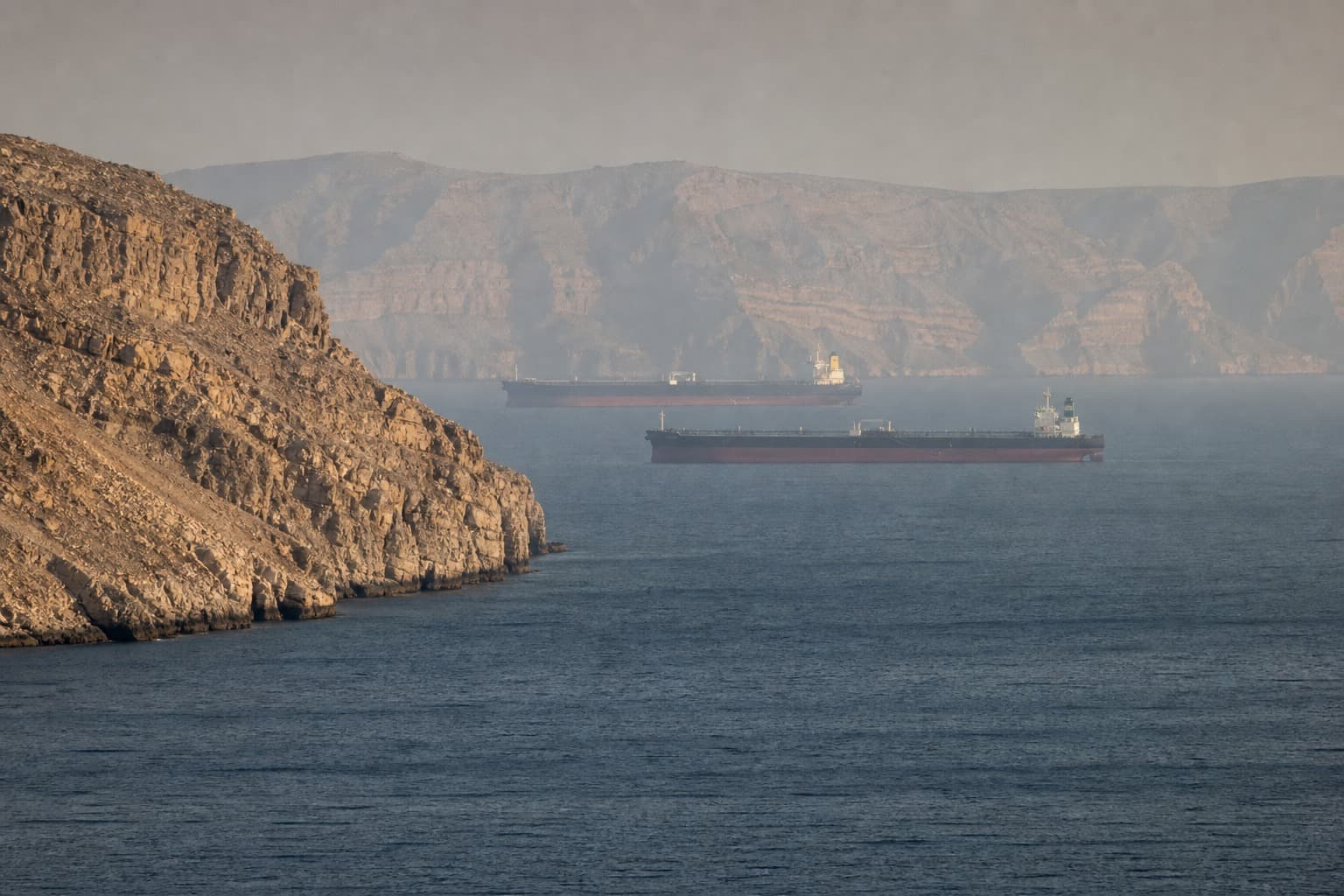
The strait is rated SEVERE and deteriorating. UKMTO puts transits about 65% below pre-conflict levels. October was the worst month of the war for attacks on shipping, and at least 11 more ships were attacked in the first week of November. Energy, shipping and insurance exposure are all SEVERE.
Confidence: High
- 02
Five of the 22 routes are SEVERE, and three of them are airspace
Hormuz and the Black Sea at sea; Iran and Iraq, Red Sea and Yemen, and Black Sea and Ukraine in the air. Europe–Asia flights are being squeezed into fewer corridors, and the Gulf airspace they rely on is rated HIGH.
Confidence: High
- 03
The Red Sea is reopening and getting riskier at the same time
Suez traffic in October was the highest since late 2023 as major carriers returned, yet the Houthis now hold the Yemeni shore of Bab el-Mandeb and Somali piracy has revived. The route is ELEVATED and deteriorating.
Confidence: Moderate
- 04
The bypasses are being tested, and none replaces Hormuz
A drone attack shut Saudi Arabia's East-West Pipeline for 11 days in September, and the line was attacked again on 9 November. Combined pipeline capacity cannot carry Hormuz volumes, and the overland alternatives are only partly built.
Confidence: Moderate
- 05
Asia's chokepoints carry the highest stakes, and Taiwan is stirring
Malacca, the Singapore Strait and the Taiwan Strait are MODERATE. But Taiwan reports more than 100 Chinese naval and coast guard ships in the region and area-denial drills ahead of the APEC summit and its 28 November elections; the Taiwan Strait is rated deteriorating.
Confidence: Moderate
The ranking
22 routes, highest risk first
Composite score on a 1–10 scale; higher is higher risk. Routes in the same band are ordered by score. An asterisk marks a route whose band is set by a decisive condition, such as a closure or open hostilities across it. The trend is GIG's view of the likely direction over the next month.
| Rank | Route | Type | Score | Band | Trend |
|---|---|---|---|---|---|
| 1 | Iran / Iraq overflight | Air | 7.6* | Severe | → Stable |
| 2 | Black Sea / Ukraine airspace | Air | 7.5* | Severe | → Stable |
| 3 | Strait of Hormuz | Sea | 7.3* | Severe | ↑ Deteriorating |
| 4 | Black Sea and Turkish Straits | Sea | 6.4* | Severe | ↑ Deteriorating |
| 5 | Red Sea / Yemen airspace | Air | 5.9* | Severe | ↑ Deteriorating |
| 6 | Gulf airspace | Air | 4.8* | High | Deteriorating |
| 7 | Red Sea and Bab el-Mandeb | Sea | 6.0 | Elevated | ↑ Deteriorating |
| 8 | India–Middle East–Europe Corridor (IMEC) | Land | 5.7 | Elevated | → Stable |
| 9 | Iraq Development Road corridor | Land | 5.6 | Elevated | → Stable |
| 10 | Gulf bypass pipelines | Land | 5.4 | Elevated | ↑ Deteriorating |
| 11 | Levant transit crossings | Land | 5.3 | Elevated | ↑ Deteriorating |
| 12 | Northern land bridge | Land | 4.5 | Moderate | → Stable |
| 13 | South Asia airspace | AIr | 4.4 | Moderate | → Stable |
| 14 | Gulf overland crossings and rail | Land | 3.9 | Moderate | → Stable |
| 15 | Taiwan Strait | Sea | 3.5 | Moderate | ↑ Deteriorating |
| 16 | Gulf of Guinea | Sea | 3.4 | Moderate | → Stable |
| 17 | Suez Canal | Sea | 3.4 | Moderate | ↓ Improving |
| 18 | Malacca and South China Sea | Sea | 3.3 | Moderate | → Stable |
| 19 | Middle Corridor | Land | 3.3 | Moderate | → Stable |
| 20 | Taiwan / East China Sea airspace | Air | 3.1 | Moderate | ↑ Deteriorating |
| 21 | Panama Canal | Sea | 2.9 | Low | ↓ Improving |
| 22 | Cape of Good Hope route | Sea | 2.7 | Low | Stable |
Who is most exposed
Exposure combines a route's rating with how heavily each sector depends on it. The three most exposed routes for each sector:
Shipping, ports and logistics
War, and state or proxy attacks on ships, aircraft and infrastructure
Energy
Strait of Hormuz (SEVERE), Black Sea and Turkish Straits (HIGH), Gulf bypass pipelines (HIGH)
Insurance and trade finance
Strait of Hormuz (SEVERE), Black Sea and Turkish Straits (HIGH), Red Sea and Bab el-Mandeb (ELEVATED)
Subsea cables and data centres
Strait of Hormuz (HIGH), Red Sea and Bab el-Mandeb (HIGH), Taiwan Strait (ELEVATED)
Aviation
Iran / Iraq overflight (HIGH), Gulf airspace (HIGH), Red Sea / Yemen airspace (HIGH)
About the method
How the ratings are built
Each route is rated from 1 to 10 on nine domains. Every score is placed against written criteria, using official advisories and data, including EASA conflict-zone bulletins, IMF PortWatch transit data and Joint Maritime Information Center threat levels, and dated events confirmed against official statements or established news organisations. The domain ratings combine into a single score, and every issue is reviewed and approved by GIG before release.
Armed conflict
War, and state or proxy attacks on ships, aircraft and infrastructure
Security threats
Piracy, crime, terrorism and unattributed sabotage
Infrastructure
Route capacity: closures, damage, draft and slot limits
Economy
War-risk premiums, freight costs and voluntary diversion
Governance
Sanctions, state control and transit regimes
Information control
GNSS jamming and spoofing, AIS gaps, communications
Calendar risk
Dated triggers: summits, elections, deadlines, expiring bulletins
Public safety
Crew welfare, port-city disorder and labour action
Natural hazard
Weather, drought, cyclones and seasonal limits
- LOW1.0–2.9
- MODERATE3.0–4.9
- ELEVATED5.0–6.9
- HIGH7.0–8.9
- SEVERE9.0–10.0